
Symposium: Theatre Viewed from Elsewhere
Dates: 9–10 April 2024
Venue: Venuše ve Švehlovce and the Municipal Library of Prague
Reflecting on our own artistic work.
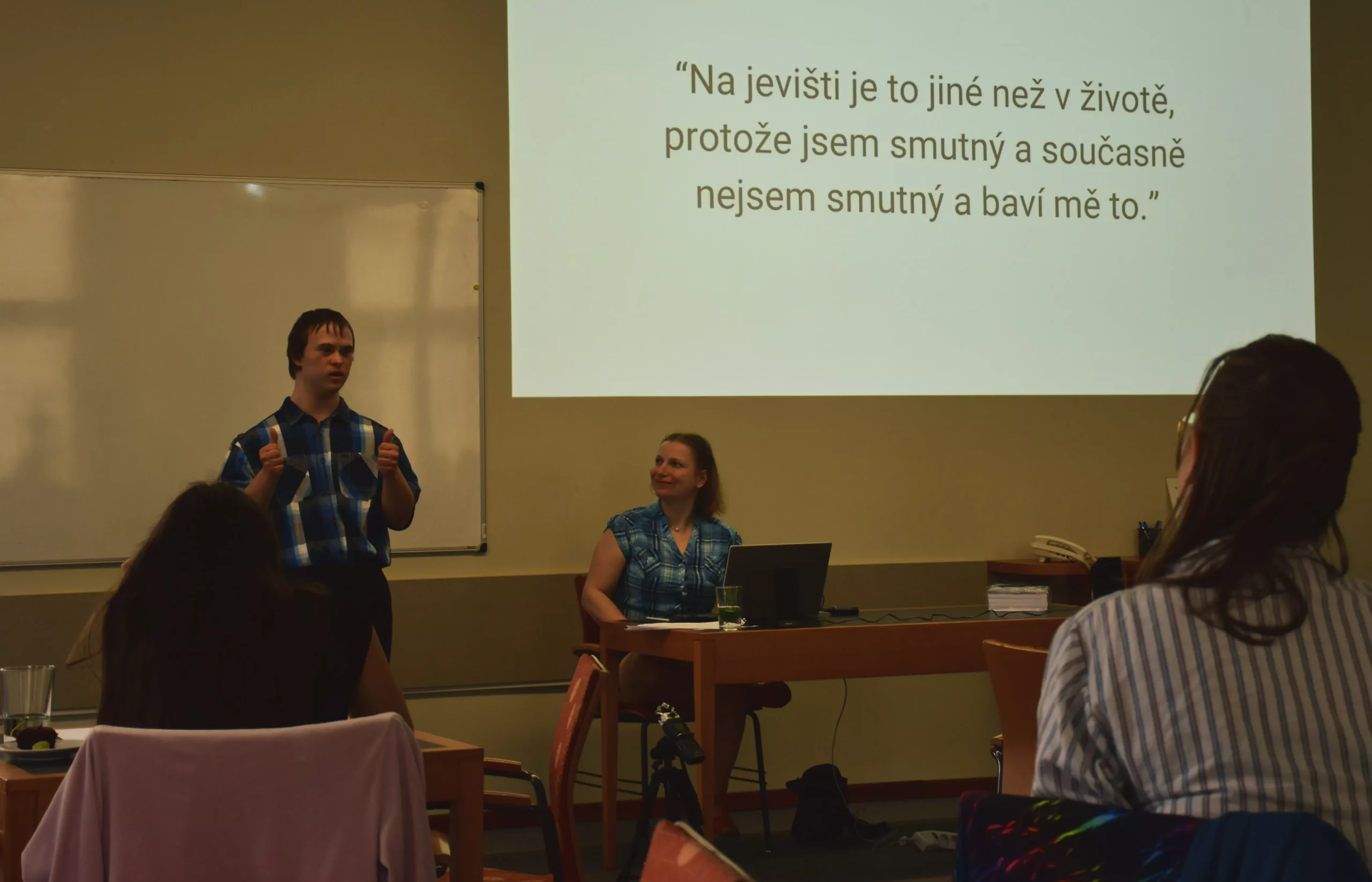
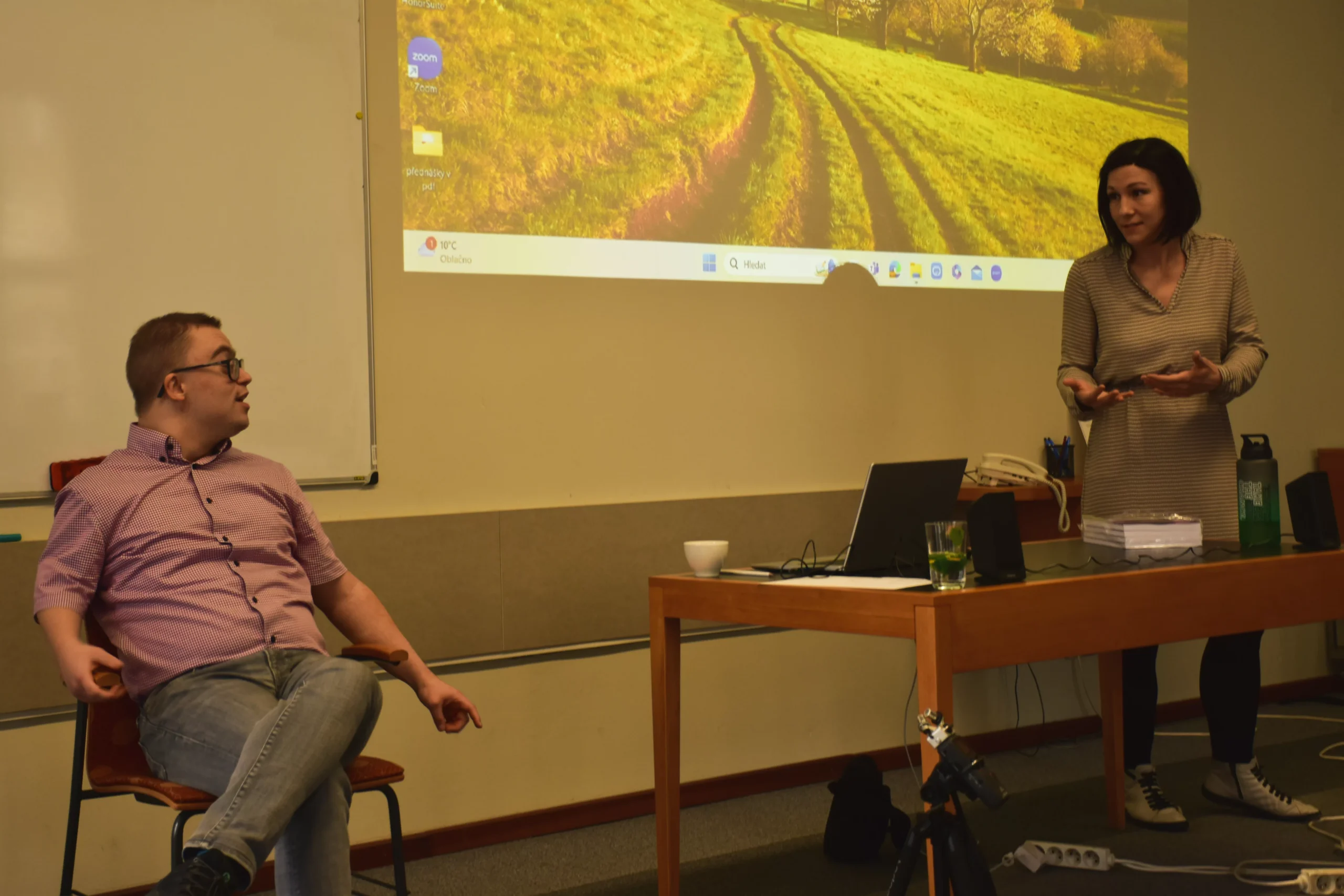
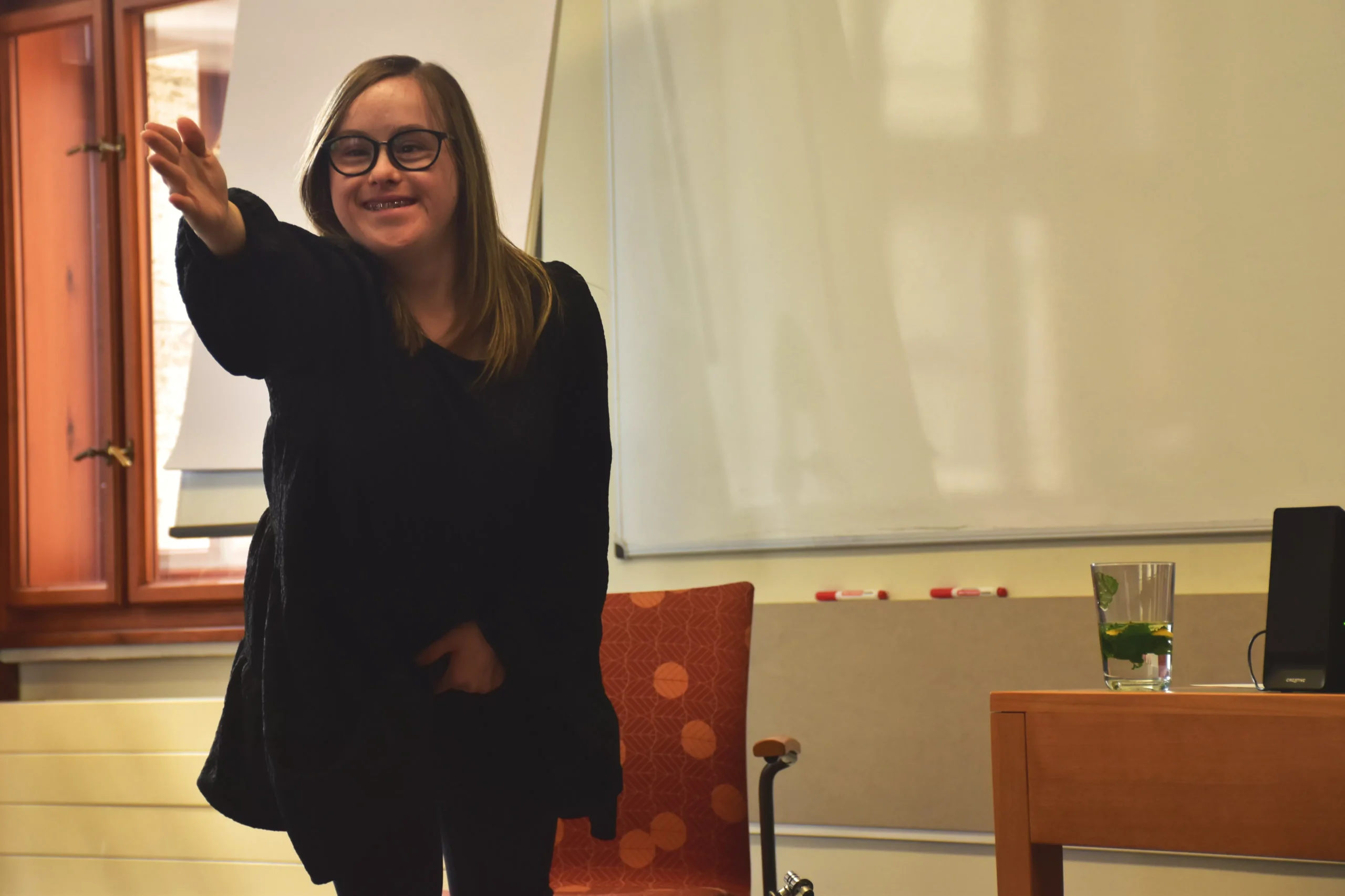
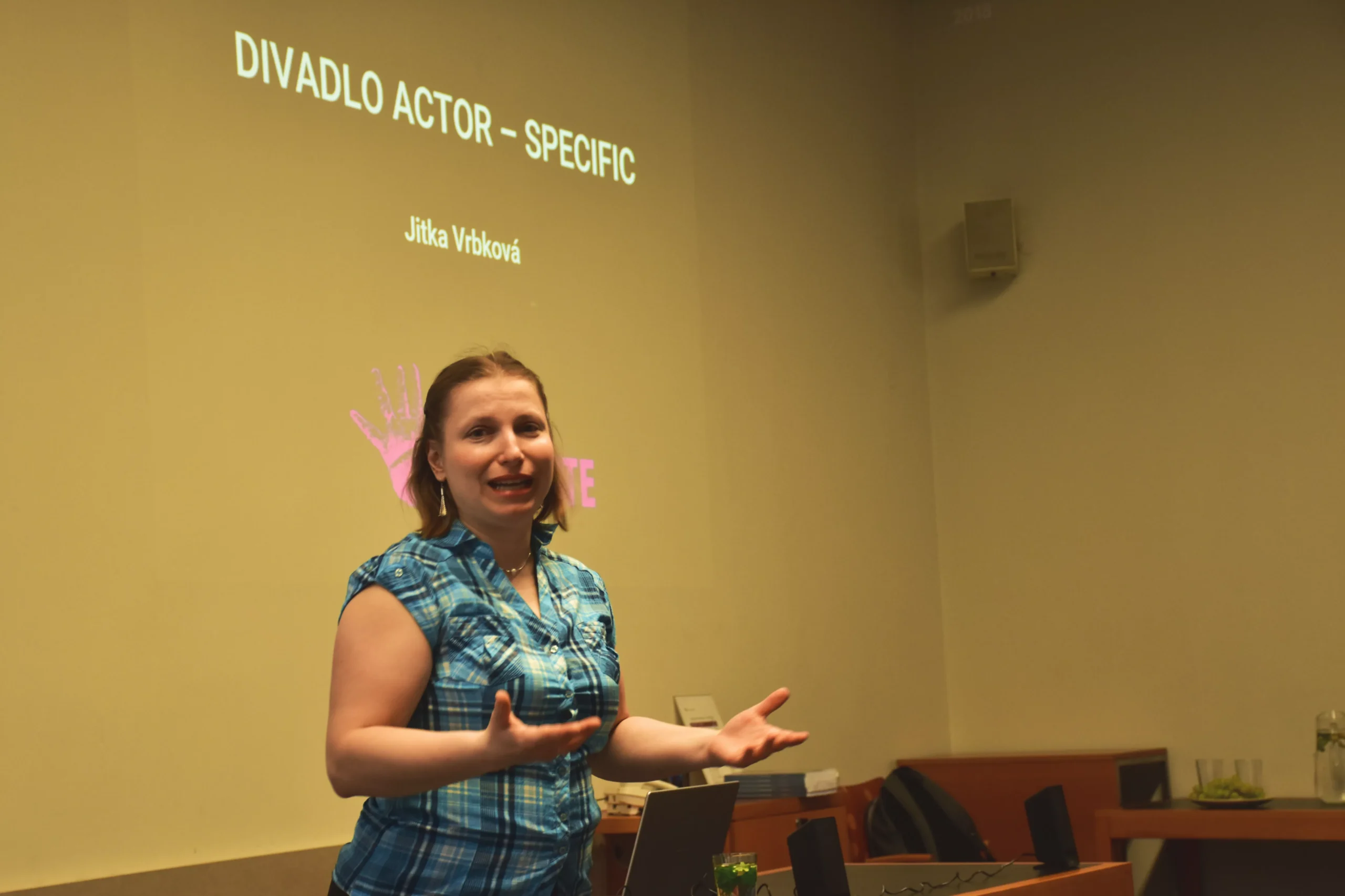
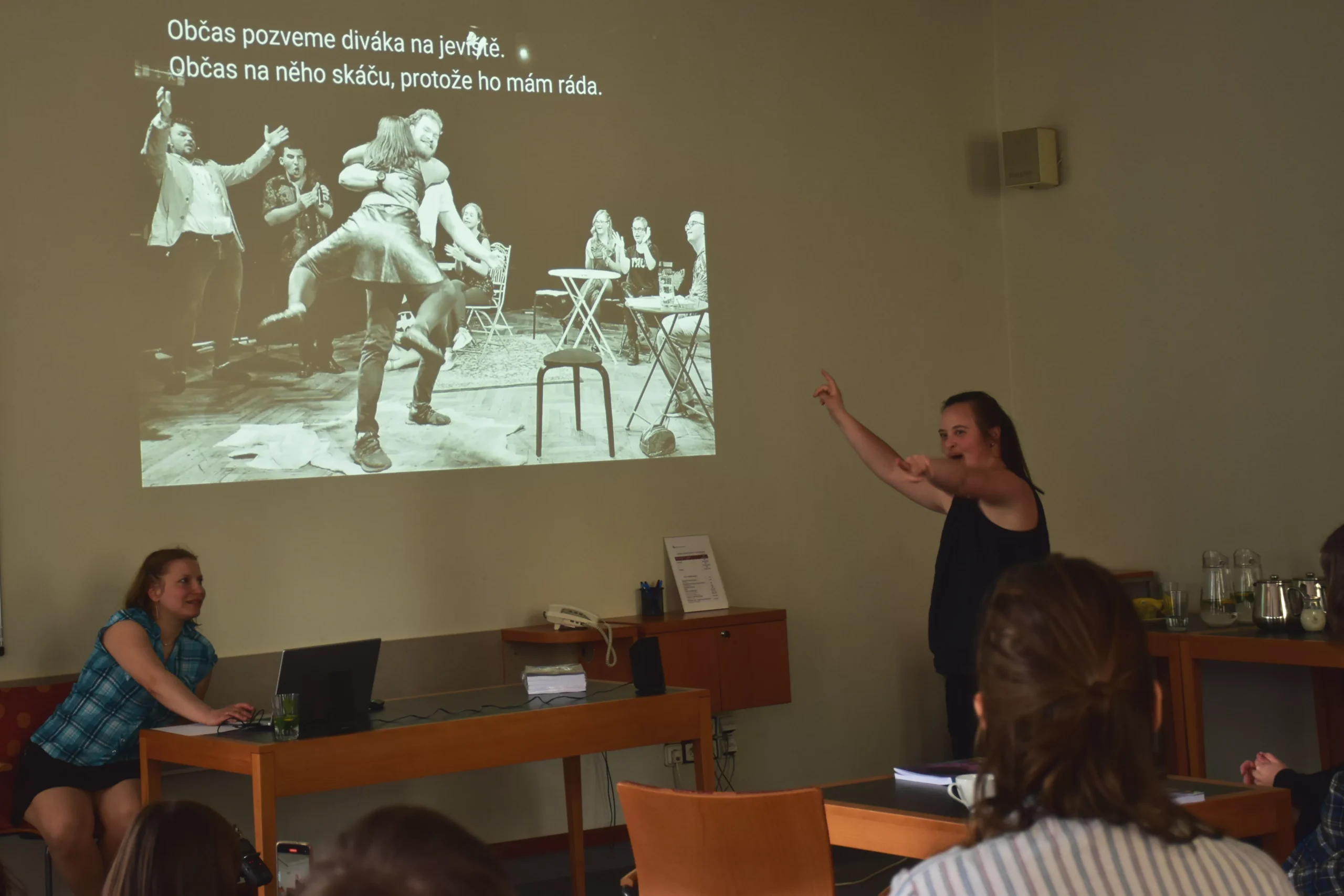
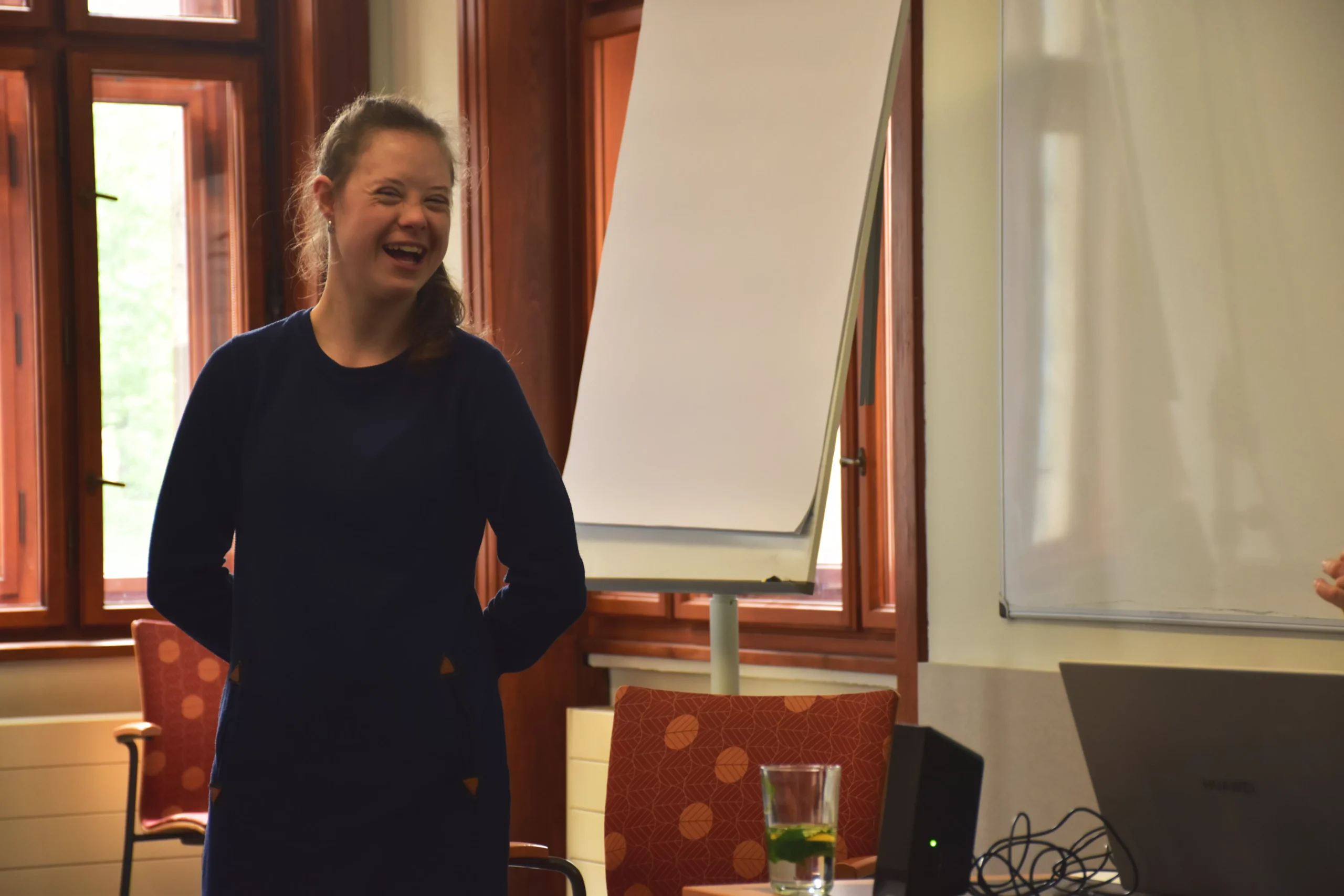
With six selected project participants, we created presentations which they then delivered themselves at the Municipal Library of Prague as part of the symposium Theatre Viewed from Elsewhere. For each participant with Down syndrome, who at that moment became a lecturer, we found a specific format that enabled them to convey their ideas to the symposium audience in a way that was both distinctive and accessible.
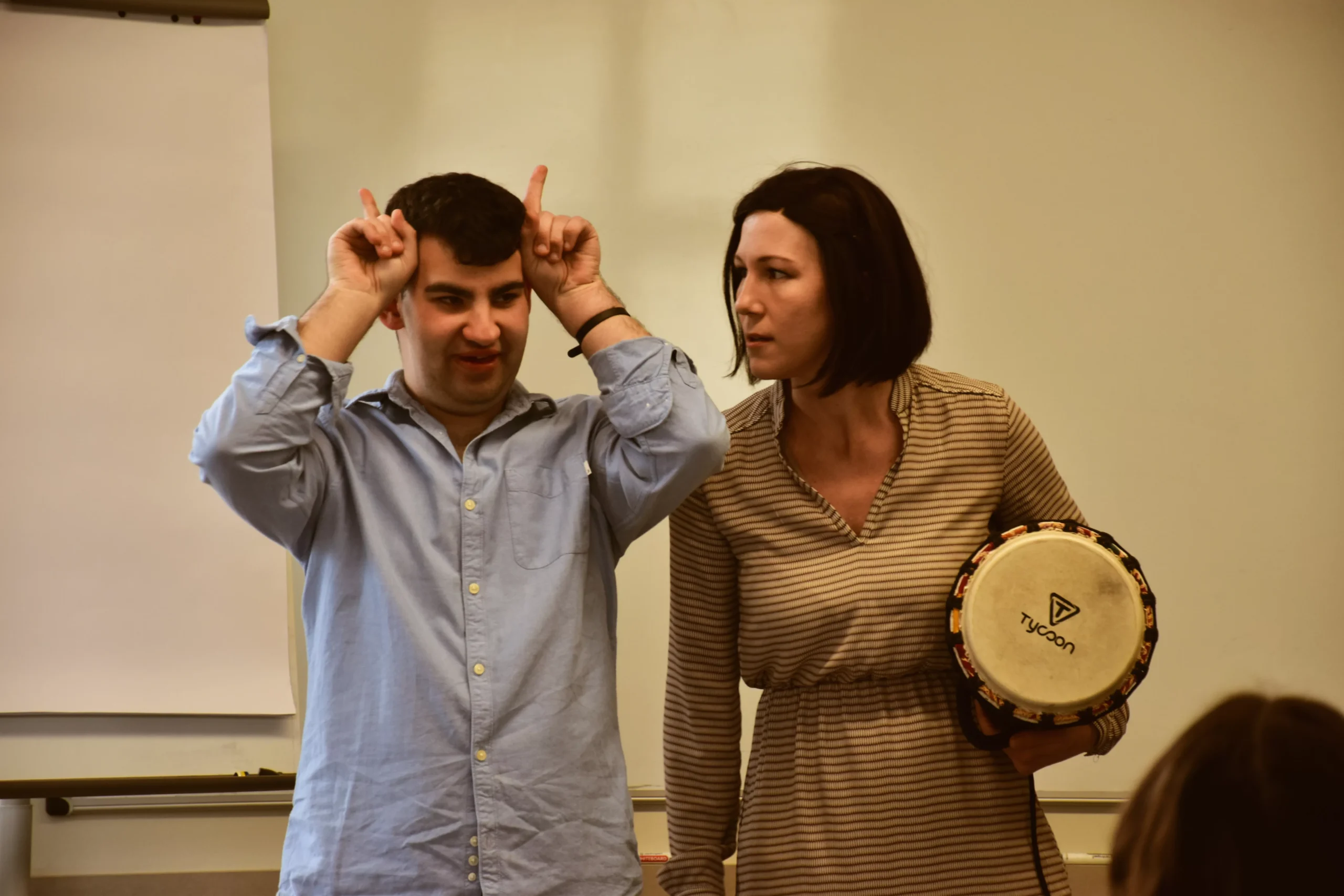
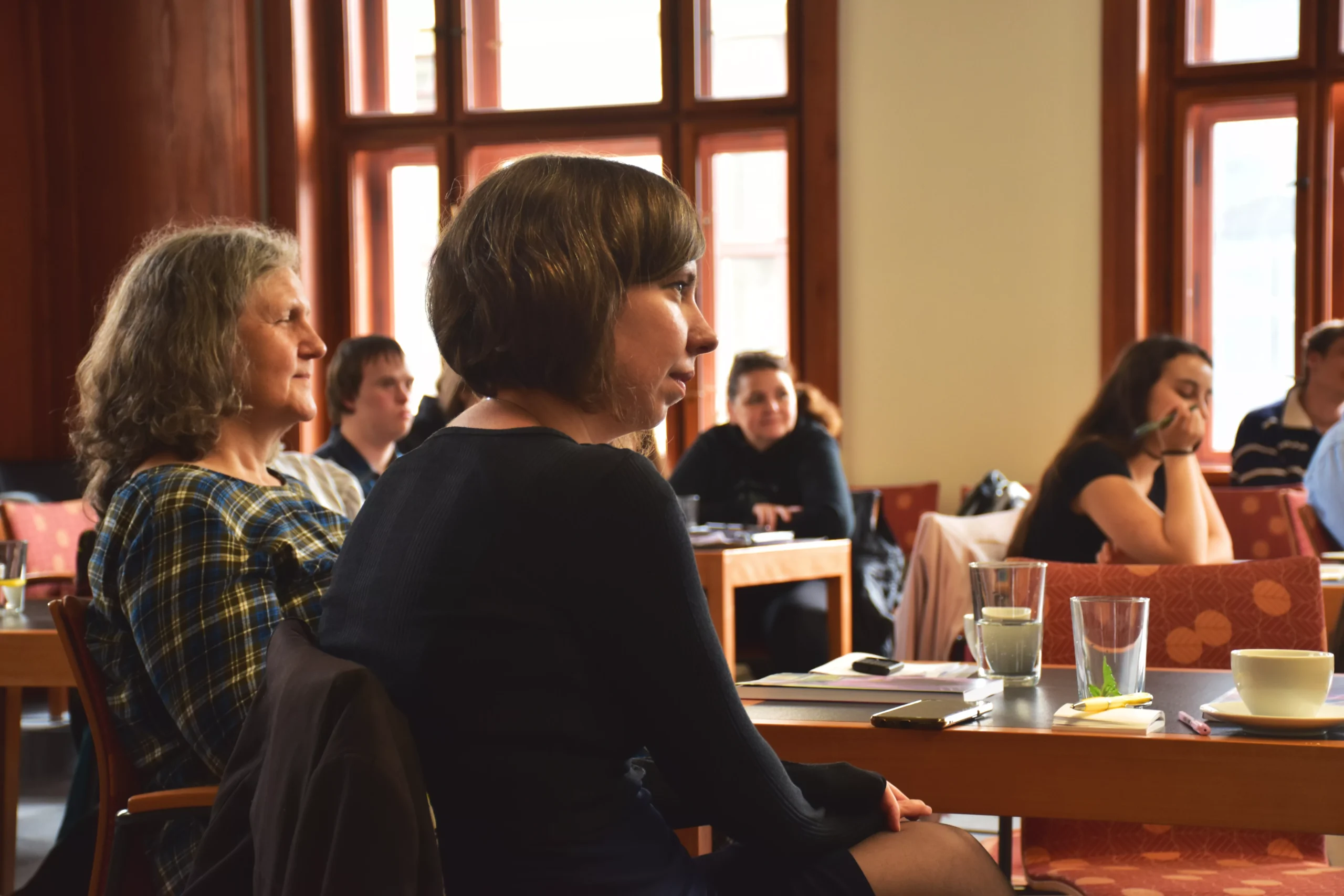
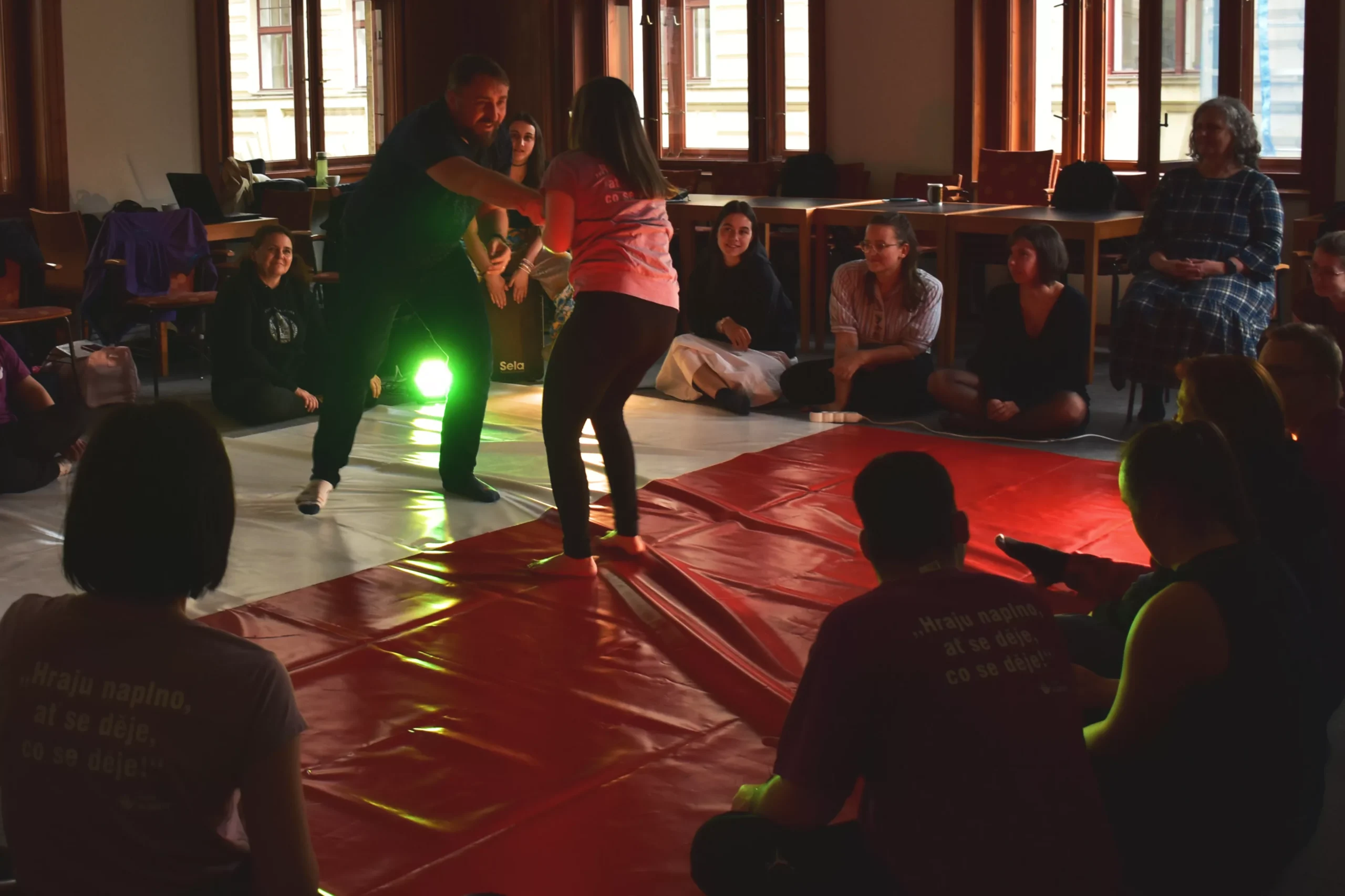
As part of the event Theatre Viewed from Elsewhere we also offered the public a lecture by Jitka Vrbková, a movement improvisation workshop followed by reflection (the combination of the “vocabulary” of performers with Down syndrome and that of the workshop participants was very enriching), and a concluding discussion led by theatre critic Barbora Etlíková.
The event was developed in collaboration with Teatrologická společnost (the theatre studiessociety).
Workshop video highlights
Gallery
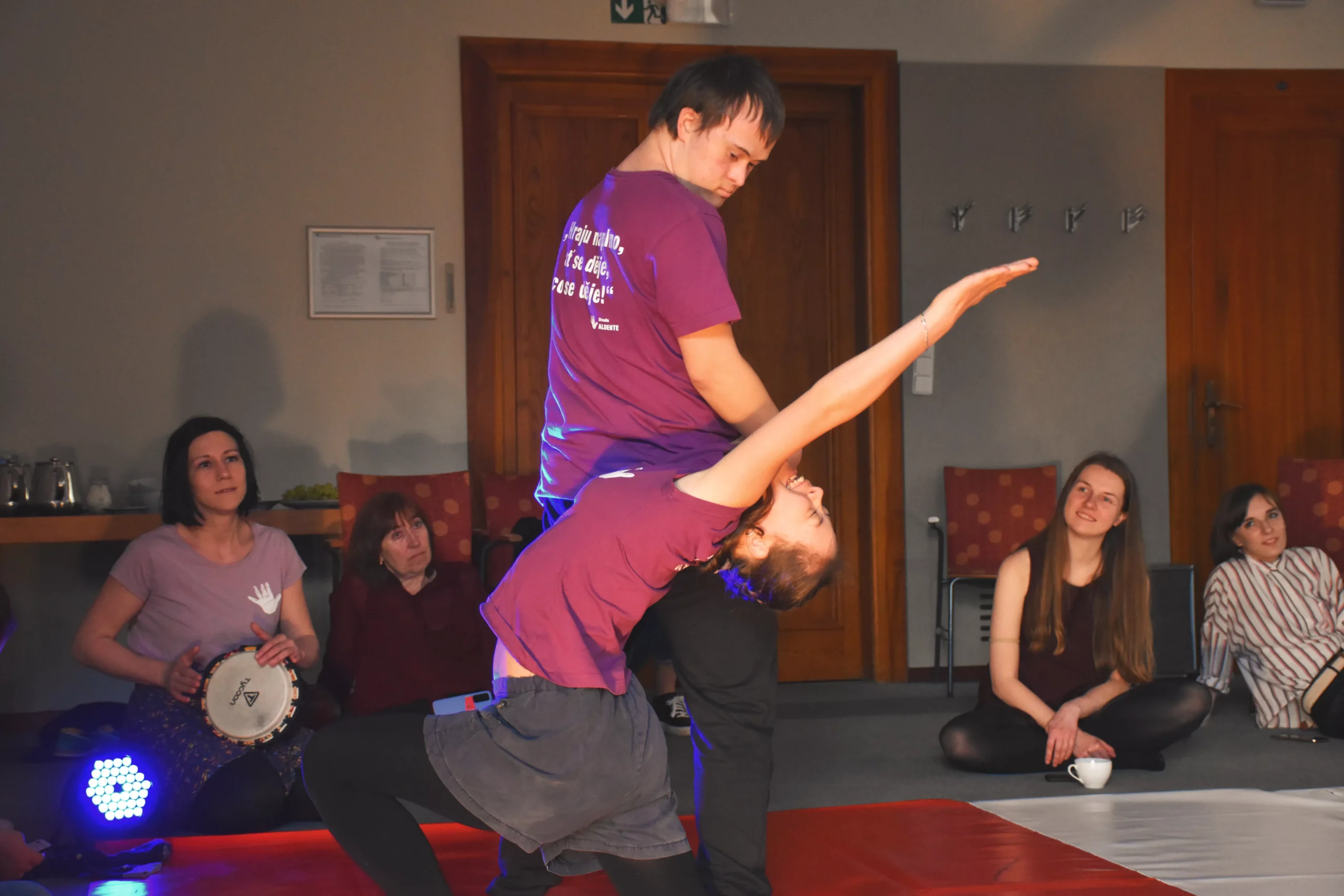
Theatre as a Path to Self-Knowledge II.
PROJECT CONCEPT
A total of 12 adolescent actors and 2 child actors with DS first took part in dance workshops with Kristýna Kučerová and, above all, mime workshops with lecturer and mime artist Sergej Sanža.
- We have been working with actors with DS to develop their movement skills since 2013; in practice, their acting training is grounded in movement because, given their more limited speech skills, movement was a way of developing performativity, particularly at the beginning of our work together, without the actors feeling stressed about being unable to say or remember something.
- We are learning to establish repeatable movement and dance skills through dance (continuing the workshops with lecturer Kristýna Kučerová) and exploring the previously uncharted territory of mime.
After the initial workshops, we selected a group of five adolescents with DS with whom we decided to work more intensively, taking our efforts through to a public presentation: a theatre production. Those selected included actors with less acting experience, including actors who do not speak at all and have more significant intellectual disabilities.
PROJECT METHODOLOGY
In essence, we needed to divide our working methodology into two approaches: one was used with actors who had more experience and greater cognitive abilities, who could reflect on an instruction, remember a sequence and make it repeatable (although all of this required a great deal of repetition). A different approach was needed for actors with more limited comprehension and memory. Paradoxically, these actors generally had a precise sense of the dramatic situation and a kind of “intuition”, so when developing the stage work, it proved more effective to offer them a ready-made dramatic situation and atmosphere which they could enter and respond to spontaneously. After many repetitions, we also managed to build scenes with these actors in which, for example, they are alone on stage. In general, our assumption that actors with DS would have an aptitude for mime proved correct, but the journey towards establishing a repeatable form was very long and required many simplifications.
A particular challenge for participants with DS was handling props and scenery – not only circus objects (balloons, poles and so on), but also mobile circus caravans, which required a high level of spatial awareness that would have been challenging even for professional actors without a disability. These workshops, supplemented by intensive weekend workshops, ultimately resulted in a fully-fledged theatre production, Circus Pefrecto.

Support Aldente

